

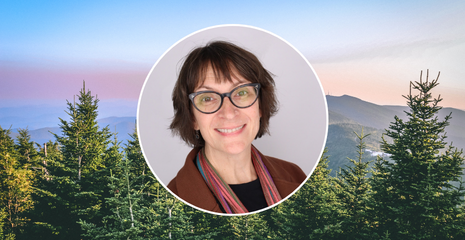
Faculty Spotlight: Kerri Shaw, Associate Professor of Cooperative Education, Rooted in Community and Relational Work
Sep 16, 2026
Kerri Shaw has always had a strong orientation toward community and relational work. That thread runs through her career in social work field education, her role as director of a community health worker program, and now her position as Associate Professor in Antioch College’s Co-op Program.
“My work in both social work field education and as the director of the community health worker program was centered around experiential learning, so the Co-op position aligned well with my experience and values,” Shaw says.
After moving from Athens to Dayton five years ago and working remotely, Shaw felt it was time to return to campus life and become part of an in-person community again.
From Appalachia to Antioch
Growing up in a working-class family connected to loved ones who sometimes struggled with poverty, addiction, and disabilities, Shaw knew early on that social work was her path. When she went to college, it was the only major she considered.
Living in Paraguay as a Peace Corps Volunteer and later practicing social work in rural Appalachia illuminated how important community health workers were in communities facing severe health disparities and lacking access to services. They were a much-needed and missing piece of the puzzle, so Shaw committed herself to growing the CHW workforce for the past ten years.
Teaching with Openness and Flexibility
Shaw hopes students approach Co-op with openness and flexibility. “Some of my most valuable learning experiences have been when doing the unexpected, taking a chance, and saying yes even when it was uncomfortable,” she says.
As a self-described “doer,” Shaw expects to be engaged in community activities quickly. She is excited to grow Antioch’s community partners list, using the college’s mission as a lens for identifying meaningful, justice-oriented opportunities for students.
Current Work and Community Engagement
Shaw will continue to serve as a content expert and leader in the field of community health work. She is also exploring a collaboration with a former student in Ghana to train community health workers there.
Her experience developing programs that address health and gender equity, food insecurity, immigration justice, and workforce disparities informs her teaching. She provides concrete examples of addressing community problems, challenging unjust policies, advocating for those whose voices are silenced, and collaborating with others to be a change agent.
“On a personal level, I strive to be a deep listener and pay attention to the needs and challenges of each student,” Shaw says. “I want to be a source of support and encouragement so that they can be their best selves in Co-op, at Antioch, and beyond.”
The Antioch Connection
For Shaw, Antioch feels like coming home. Her family has deep roots in Yellow Springs, and she sees her values reflected everywhere on campus. “It is a nourishing reminder of what the world can be when we live in deep community and honor diversity,” she says. “I also love to watch students blossom through real-world experiences, so Co-op is a great fit for me.”
Shaw sees cooperative education and community-engaged learning as natural complements to Antioch’s dual work program. Co-op and ACW (Antioch College Works) allow students to cross-pollinate skills while building confidence.
“We don’t learn in silos,” Shaw says. “ACW is a way for students to practice interconnectedness, which can help them step into Co-op, work relationships, and new communities with increased readiness and ability to integrate.”
Beyond the Classroom
Outside of teaching, Shaw is an active member of the Miami Valley Immigration Coalition (MVIC), where she helps neighbors in Dayton navigate life as an immigrant. She also enjoys traveling with her family, reading, kayaking, gardening, preserving food, and hiking with her dogs.
Her volunteer work with MVIC keeps her grounded and actively practicing cultural humility (and her Spanish skills). “It reminds me that it takes all kinds of approaches to social justice to make the world a more welcoming place, that there is not one right way,” Shaw says. “I hope that I bring this openness and humility to my teaching.”
She also values work-life balance, noting that practicing self-care makes her a better educator and example to those around her.
And something students might be surprised to learn: Shaw once had a sheep farm.
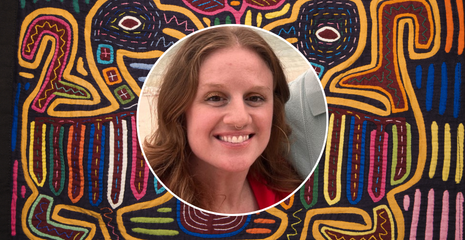
Faculty Spotlight: Allie McCarty, Visiting Instructor of Spanish, on Language, Curiosity, and Antioch
May 29, 2026
For Allie McCarty, the path to teaching Spanish began with a childhood curiosity instilled by her parents. “Since I was a child, my parents instilled in me a curiosity for the world beyond my understanding,” she recalls. At age 14, she was taken on a journey across South America where travel was limited to buses, trains, and bunkbeds. Upon entering college, there was no question that she wanted to study Spanish.
Beyond graduate work, Allie’s journey includes planning and leading annual international exchange trips for nearly a decade and serving as a department head of languages, where she helped house a Mandarin Chinese language program in collaboration with the College Board and its guest teacher program. Her own experiences living, working, studying, and traveling extensively throughout Latin America continue to inform her teaching.
Teaching Philosophy
While the leading objective of any language proficiency course is to acquire the skills necessary to use the target language, Allie prioritizes instilling an inherent interest beyond the language that keeps students engaged and searching for more. She enjoys curating authentic materials by weaving media, music, stories, and news articles as the driving force behind each lesson.
Language study, she explains, can serve as a mechanism for understanding our own cultural conditioning and biases. “This process often affords one the opportunity to hone their cultural curiosity and empathy in order to more effectively engage with their own communities and beyond.”
Current Work & Interests
Allie is currently teaching Sounds of Resistance: Music and Protest across Latin America, a course she developed this past year. From transnational political movements to Bad Bunny and Residente, the content feels deeply relevant as it highlights contemporary musicians who are using their platforms to challenge power, amplify marginalized voices, and shape public discourse across the Americas.
This past N/D block, she spent November and December in Peru at the Chaikuni Permaculture Institute, working to address deforestation using agroforestry and permaculture principles.
The Antioch Connection
“Antioch’s commitment to experiential and socially engaged academics makes it a prime environment for language education, naturally connecting students to intercultural understanding, community engagement, and global perspectives,” Allie says. She deeply appreciates working at an institution that combines a progressive liberal arts education with experiential learning, social engagement, and close mentorship.
Language learning, she notes, supports the goals of the ACW program by developing intercultural communication, community engagement, and career-ready skills that prepare students to work effectively in diverse local and global environments.
Outside the Classroom
When she is not teaching, Allie enjoys traveling, cooking, making art (especially pottery), and practicing yoga. She is a certified yoga teacher and an adoption coordinator for a local cat rescue, where she also helps run social media.
In 2022, she received a professional certification in Permaculture Design from Oregon State University and has been working on applying learned principles on her own land. She also works in curriculum consulting with Beyond Organic Design out of NYC, an organization aiming to integrate permaculture curriculum into the New York City public school system.
Allie also co-creates and hosts a podcast with Dalia Laurencio titled Navigate the Now. They are currently working on season two and have hosted guests including Beth Macy (Paper Girl), Robyn Moreno (former editor of Latina Magazine), and many others doing important work navigating today’s political climate.
Something students might be surprised to learn: Allie has done professional fire spinning (hula hoop) and led a hula hoop dance troupe in Florida.
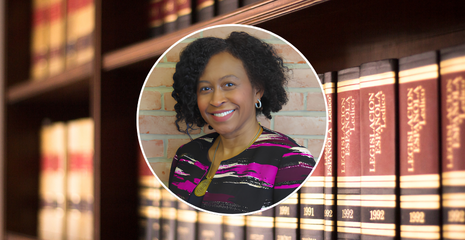
Faculty Spotlight: Jacqueline Gaines, Assistant Professor of Cooperative Education, on Law, Justice, and Antioch
Apr 08, 2026
Jacqueline Gaines, is an Assistant Professor of Cooperative Education and an Ohio-licensed attorney with over 20 years of experience. For 13 years, she served as a family law magistrate, presiding over complex cases involving child custody, parenting time, domestic violence, contempt, and property division. Prior to that, she worked in private practice for six years with a focus on business litigation and employment law.
For over a decade, while holding a full-time law job, she also served as an adjunct professor at several institutions, including the Maurer School of Law at Indiana University, the University of Dayton School of Law, and Central State University. In 2025, she made the decision to transition from practicing law full-time to full-time teaching. Antioch College gave her that opportunity.
Current Research: Economic Abuse in Intimate Partner Relationships
Professor Gaines is currently writing a scholarly journal article about economic abuse in intimate partner relationships, with a goal of completing it by the end of the 2025–2026 academic year. “Economic abuse is a form of domestic violence, but it does not garner the same attention as physical violence,” she explains. “As a society, we should pay more attention to economic abuse because it is prevalent and is on the rise. Economic abuse is a contributing factor to poverty, homelessness, and unemployment. The lack of economic security leads domestic violence victims to stay in abusive relationships.”
The Antioch Connection
Professor Gaines hopes that students leave her classes and mentorship with a sense that they are capable of achieving their professional aspirations because they are well equipped with the skills necessary to do so. Working at Antioch aligns with her professional values. “Antioch has a storied civil rights and social justice history, and it has been a pioneer in higher education,” she says. “I am proud of the legacy of Antioch’s first president, Horace Mann, who is known as the father of American education and was an abolitionist. I am proud that the first lady of the Civil Rights Movement, Coretta Scott King, was an alumna, and I support the mission of the Coretta Scott King Center under the directorship of Dr. Queen Zabriskie. I believe in Antioch’s mission to make a life changing college education accessible to all. I am proud that Antioch is the first federal work college in Ohio and of the dual work program which enables students to graduate with real world work experience.”
Law School Trip and Future Programming
During fall term, Professor Gaines, Lara Mitias, and Richard Kraince took a group of ten students to the University of Dayton Law Day Fair, where admissions representatives from law schools across the country were present. “I wanted students to have the opportunity to talk to law schools in order to demystify the law school admissions process,” she shares. “I wanted students to know that attending law school is a viable option for them and that there are many types of practice areas you can enter into, from environmental law to civil rights law to corporate law.” She believes that exposure to the law is important so that students can see that a law degree is versatile and can be used for community organizing or to enter various career fields that may not directly involve being in the courtroom. Her plan is to take Antioch students to the UD Law Day Fair every year.
Future events for the Law Group will include viewing and discussing law related movies and documentaries, as well as lunch and learns where alumni who are lawyers can present to students and answer their questions about their law practice. She is also interested in working with students to help them organize law programming that interests them.
Outside the Office
When she is not teaching or writing, Professor Gaines grows a small vegetable garden, spends time with her dog and cat, and enjoys traveling and exploring new places with family and friends.
Theater Tech: Sound Intern for the San Francisco Mime Troupe – Lark Orbe ’26
Mar 04, 2026What is SFMT?
Summer of 2024 I interned at the San Francisco Mime Troupe (SFMT), a touring company, performing political comedy musical theater. The SFMT website shares the mission of SFMT which is “to create and produce theater that presents a working-class analysis of the events that shape our society, that exposes social and economic injustice, that demands revolutionary change on behalf of working people, and to present this analysis before the broadest possible audience with artistry and humor.”
SFMT performs in local parks throughout the Bay Area, sometimes traveling farther North or south of the city. All shows are free or by suggested donation, making shows financially accessible to all. There are devoted SFMT attendees that have been coming to the shows since they were young kids. The props designer herself grew up being amazed by the troupe’s stage magic that she found her way to work with the company as an adult. SFMT is run by a collective, currently of about 10 people, who mostly make decisions by consensus. SFMT strives to embody their “ideals of combating the fragmentation of the working class: we are a democratically run, multi-ethnic, multi-generational, multi-cultural, gender-balanced theater of social justice that by its very existence sustains a vision of community governance of, by, and for the people.” I appreciate SFMT’s striving to embody these practices based on values of community empowerment. I have come to learn that there are power dynamics and ways of doing things that I think could be discussed in more depth that would help strengthen SFMT’s work — as seems the case with most organizations. Nonetheless, it feels like these ideals have set a foundation for principled work and it seems there is space to have these open conversations about what’s working and not working more so than some other places I’ve worked with.
Newcomers and Feedback Processes:
When I first got to SFMT, a couple younger members of the collective encouraged me, as a newcomer, to share ideas and offer feedback on the process on how we do things and the shows itself. Once we got into the first couple weeks, with support from multiple collective members and other younger interns, I was encouraged to send an email to the SFMT Collective with my feedback on how student activism and the narrative around Palestine was being framed. The collective was very appreciative and receptive to my email, and they implemented some changes to the script based on the thoughts I shared. This was really cool to experience and I felt that I, myself, was valued and what I had to say was seriously considered. Though the process was a little bumpy because, even though I was invited to speak, I still didn’t know the limitations of what I was welcome to speak on and I didn’t want to impose myself in this space I was new to. I functioned on the philosophy that I would offer all I had to say, uncensored, written with respect, and I trusted that they would take what they wanted and leave what didn’t work for them. This worked for me in this case. Though I was able to offer feedback, I can see how it is unlikely that other young people new to the collective would feel as empowered to speak up when the limitations are not clear and there may not be enough relationship built with collective members for folks to feel comfortable offering their perspectives. Myself and another intern offered this feedback at the end of the summer reflection session in September.
The content of the summer show and community outreach:
The show itself is called “American Dreams” and it explored the dynamics leading up to the 2024 election, student activism for a Free Palestine, and the future of AI programs. The show seeks to open up the conversations on these issues amongst audience members, to spark critical thought and maybe even mobilize people to get involved in community organizing. In fact, some groups tabled at our events, like the Green Party and other folks registering voters. Community outreach is something that could definitely be strengthened, like getting more community organizations at events. But this has not been something SFMT has been able to prioritize with their budget, time, and people so far.
As for the story, I appreciate that we hold space to recognize the genocide in Palestine, but I also think we could have gone deeper into the dynamics surrounding this issue. I think it is essential to not be silent and to keep bringing our attention to violence and injustice so we can end it. I am proud of us for speaking out. I’m also curious how the mime troupe may be able to explore issues and tell stories that are more deeply connected to grassroots movement and building solutions.
Sound Production:
As for my personal learning, I got to learn about a touring sound system! I became familiar with what plugs into what. I am still grasping why each thing plugs into what.
- Instruments connect to DIs (Direct Inputs) to boost the signal sent to the amplifier that boosts the signal before sending the sound signal to the speakers.
- There are 2 types of ¼ inch cables. We used ¼ to connect the instruments to the DIs:
- TRS (stereo): can carry 2 audio signals
- Mono cables: can carry 1 audio signal
I’m still not exactly sure when you use what. But I got Taylor Gonzalez’s number in my back pocket so I can ask him. Some more info on this is here: https://gollihurmusic.com/the-difference-between-mono-and-stereo-cables/?srsltid=AfmBOoqq5jtfN0RGsUKqNk85J_0sjBAOm2wNgCOqdr0VjkTE2Y-WPHfd
- The Snake is where all the signals from the instrument DIs, band pit microphones, and wireless mics are gathered together into one bundled cable that goes from the backstage/band bit all the way to the back of the house amplifier and mixing board (theater term for behind the audience) where the live mixing is done.
- XLR cables carry sound signals and power. We used XLR cables to run from the instrument DIs to the Snake, and from the Snake to the speakers, from the wireless microphone receiver to the Snake, and from the instrument DI to the band pit mixing board and then out to the band pit monitors.
https://www.gearit.com/collections/xlr-cables?start=0&rows=16
- Stage Monitors and Phoenix 5 pin cables: pain in the *ss to fix for a traveling company, we needed to fix them all the time.
- Band Pit Monitors and the Band Pit Mixing Board: We used three speakers, one for each of the musicians. We used the mixing board to adjust the levels of each instrument in each of the monitors to the liking of each musician.
- Wireless Microphones: We used battery powered wireless mics that connected via radio signal to the monitor that then sent the sound signal out to the speakers.
- Speakers and Delays: We ran cables out to speakers in the audience and Taylor did some calibrating from the sound board to align the timing of the sound input through the delays.
- Avoid crisscrossing sound cables and power cables because it might create a hum. If they must cross, do it at a 90 degree angle.
- Half of trouble shooting is turning things on and off and checking cables are full plugged in or working.
- I learned how to coil cables and made a video I posted on my art instagram @keepnotknowingwhatyouredoing
Working together effectively as a team:
A Typical Day:
We would empty a whole big truck of a whole set and whole sound system put it up in the park, do a show, bring it down and go home by 6pm.
Or we would go out dancing after!
Communication Strategy:
The company really developed a wonderful working relationship in which we communicated very smoothly and clearly. There are phrases we used like “going up”, “going down, and “hands on” when working with the mechanical back lift of the truck. We also developed norms around carrying things, passing things to someone and making sure then tell us they got it, or knowing which pieces need 2 sets of hands to carry.
Effort:
I am very proud of us for all putting an effort into the collective process. I heard that was not the case the year before in which a couple actors chose to not participate in the set up/break down all the time which resulted in a fragmented group moral.
Self regulating:
But even when tension was high, we didn’t take it out on each other. A smooth set up, show, and breakdown was incredibly gratifying and satisfying.
Checking in and switching out as needed:
We did a pretty good job at switching out when someone needed to take a moment to recuperate. It is hard work. One of the core members got a back injury off hours but on top of all the lifting, driving, and performing he was doing.
Collective embodiment practice?
Though we took care our each other, I still think some collective body practice could be beneficial to everyone’s long term health. But it’s hard to start a tradition as an outsider.
Keeping it positive:
Throughout the truck loading and unloading we would often joke around and laugh together, staying focused and keeping spirits up!
I’m proud of us and I’m grateful to all the people I have connected with, the skills I’ve built, and all the effort and care we brought forth, and with silliness to spare!

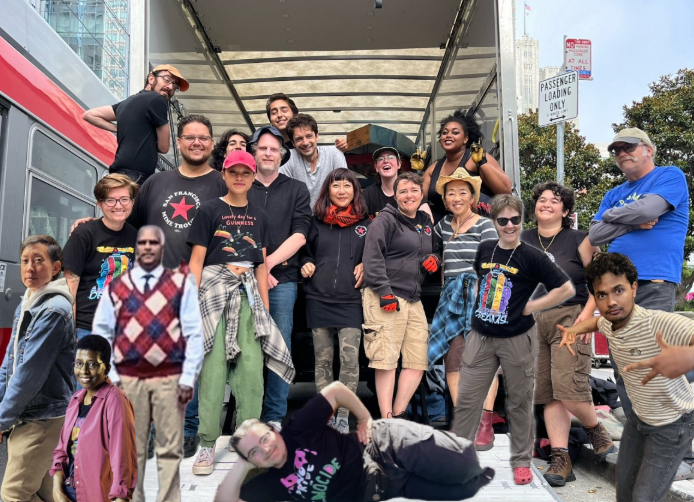
The whole Mime Troupe Crew for Summer 2024

Micki, Andre, and Taylor in the truck

Myself and another intern, Marisa, at SF Trans Pride Parade.

My last moment at the Mime Troupe, leaving for my flight to Ohio at the end of August 2024.

Cast, crew, and band members raise the Periaktos