

Gone Lichening: Brennan Mumper ’27 at Arc of Appalachia
Sep 25, 2026Ever been lichening? It’s like birding, but your subjects are much less likely to fly away when they hear you approaching. A few weekends ago, I was sent to help out at an event (Wildflowers and Songbirds of Ohio’s Deep South) and I decided to bring along my little ODNR lichen identification pamphlet that I’d gotten at Antioch last spring.
I had already helped move all of the stuff we would need for the weekend into the house; I had chopped a few tomatoes and some parsley along with the other volunteers for breakfast the next day; and I had hiked out into the field behind the manor house, to Tremper Mound, and down and around the creek. I still had a few hours to kill before anyone else would arrive, so I headed back into the house, picked up my lichen guide, and ambled out into the lawn, where there grew a short, squat dogwood. I flipped open my guide, entangled myself in the branches, and set about trying to identify what I saw.
That weekend, while others were focused on blossoms and birds, I found myself engrossed by lichen. I identified twenty-six species in two and a half days — not bad for an amateur! (Don’t worry, I wasn’t so taken by fungal symbioses that I neglected our vascular plants and vertebrates. I learned to identify large-flowered valerian and two-leaf dwarf dandelion, and redstart and kingbird; I spotted a courageous rust-orange spring peeper; and I appreciated plenty of mountain laurel and ladyslipper.)
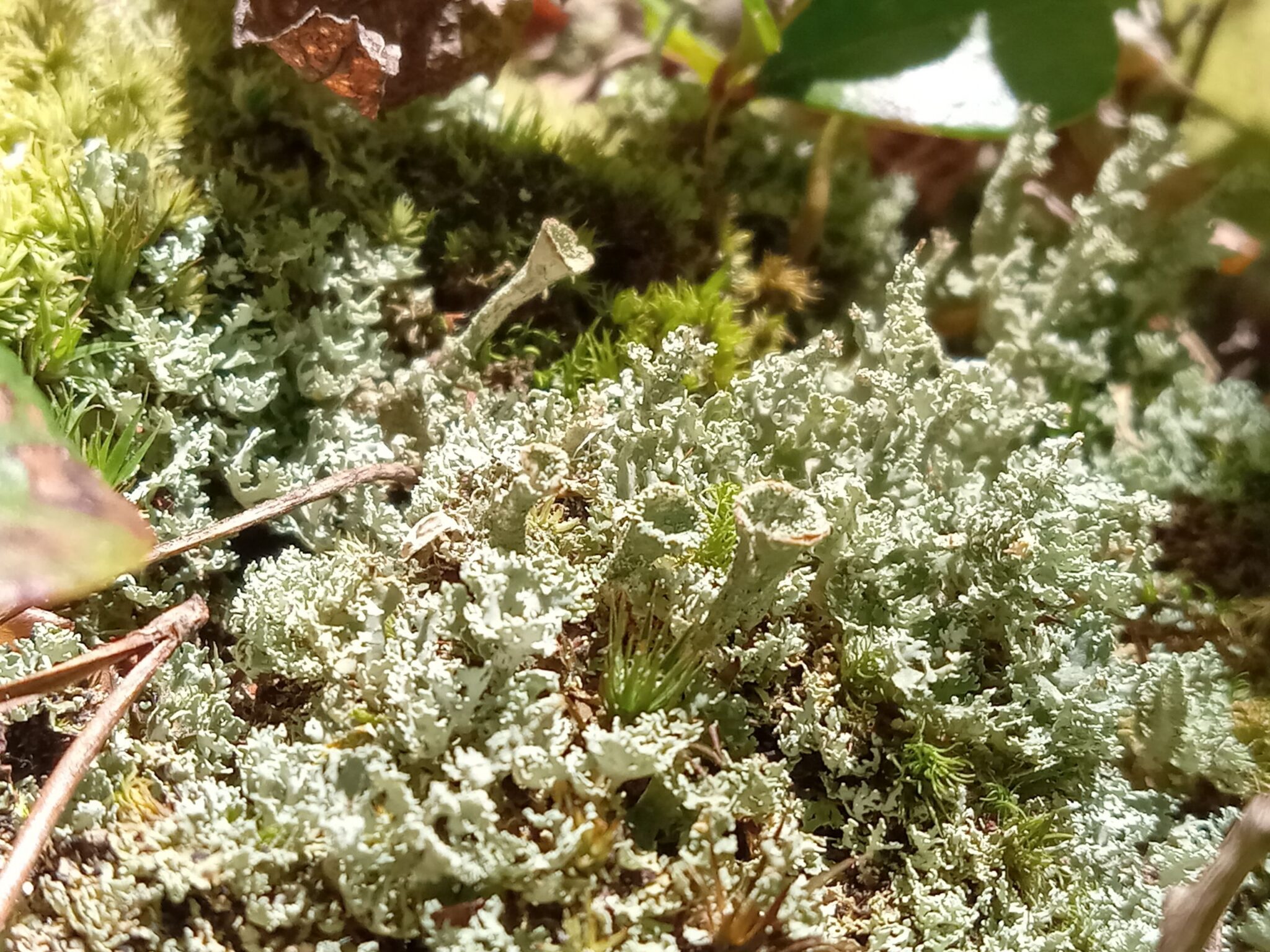
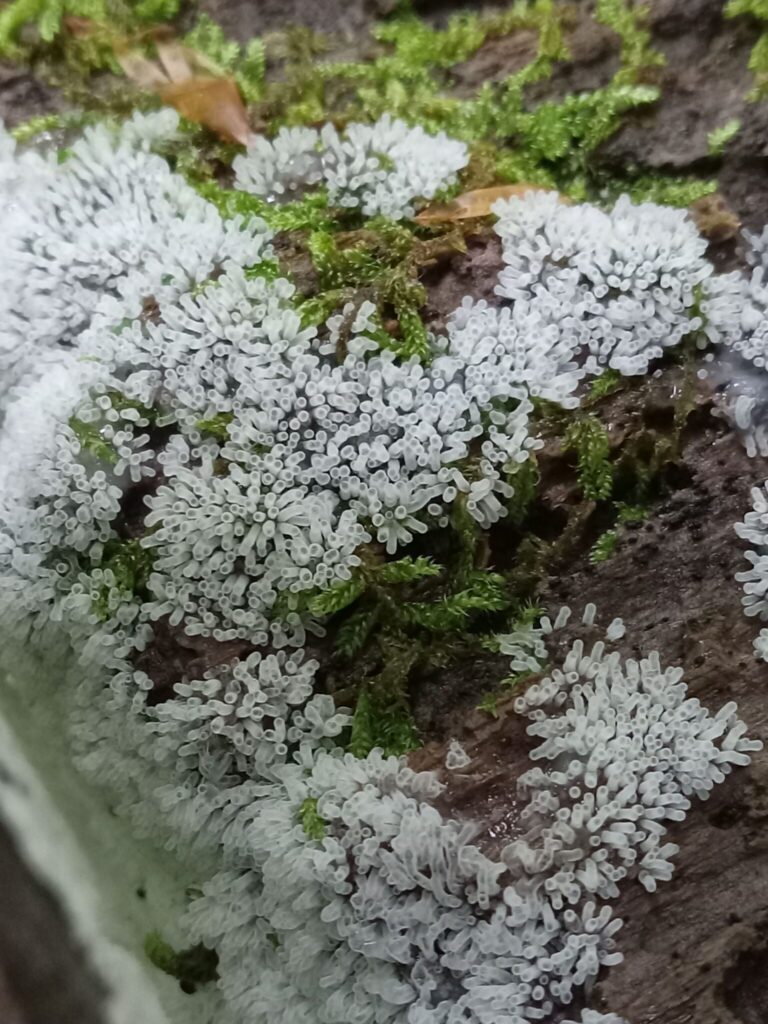
At least a dozen of those twenty-six were present on that first dogwood. That’s another nice thing about looking for lichen: you don’t have to go very far. Instead, you go close, with the help of a hand lens or, without one like I was, by pressing your face right up against the cool, crumbling bark and squinting at the tiny, delicate fronds of lemon lichen or at the strange black hairs sprouting out of the pleated edges of powdered ruffle lichen. There was common greenshield and sunburst lichen and a great deal of what I’ve been calling the “little grey lichens”, a morphology of intricate seafoam-colored things that I haven’t quite been able to detangle into species quite yet. I spotted common button lichen, which you’ve seen too: small black dots, the size of a pinhead, peppering bark or rocks or concrete, and common script lichen, which you’ve likely also encountered and assumed was, in the words of one of the folks at the event, “just some schmutz.”
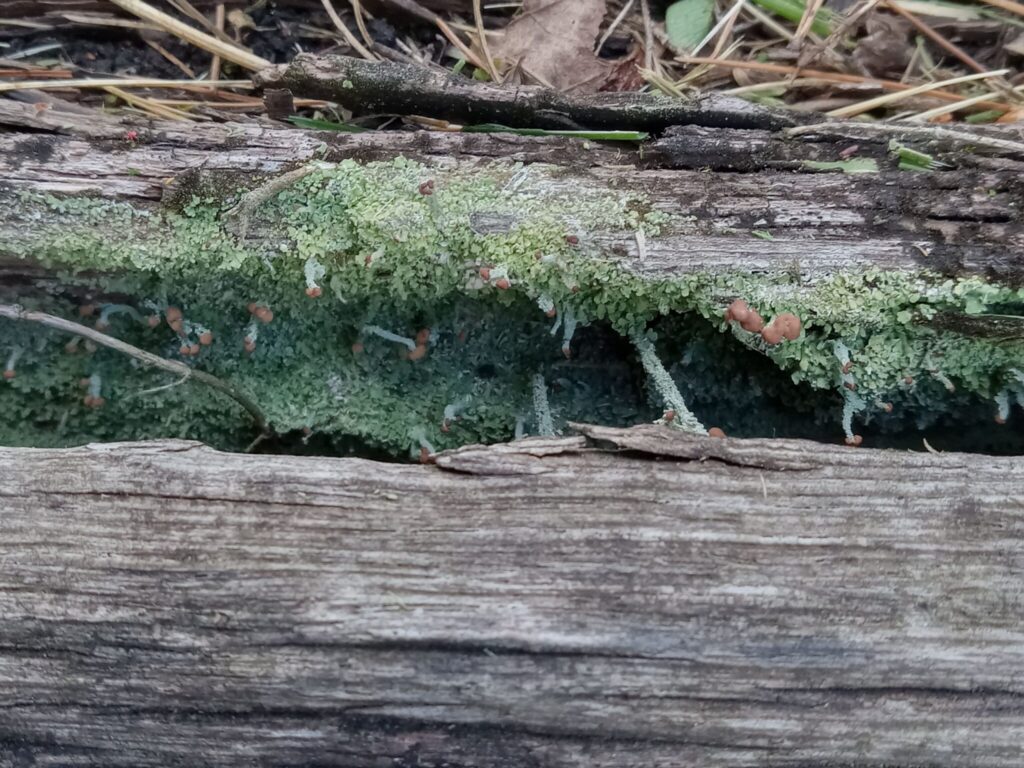
At the sandstone fields of Kamama Prairie, amongst the blushing phlox and the neon-orange Indian paintbrush, I, in a fit of excitement, gaped and pointed when I spotted bushy-beard lichen sprouting out of the side of a tree. Another of the event attendees, who I had been chatting with for a while, laughed at my silent show of enthusiasm.
“Well,” I told him, “I don’t want to scare it away.”
Lichens, if you don’t know, are those crusty greenish things that grow on the sides of trees and the backs of signs (although there are a great deal more types, some of which have some pretty outlandish appearances, including the turban lichen, the ramalinas, and the dixie reindeer lichen I would spot elsewhere in the coming weeks). They’re classified as fungi, but they aren’t really; they’re sort of not even an organism at all, depending on your perspective. They’re what happens when a fungus develops a symbiotic relationship with a photosynthetic microbe of some sort. The photosynthesizer, be it algae or cyanobacteria, lives within the safety of a structure that the fungus grows around it, and the fungus takes food from the photosynthesizer. Lichen have been described as “fungi that developed agriculture,” and that’s sort of true, but like if you could grow corn inside your skin, and if the corn was removed, you would die.
Lichens have long been a fascination of mine. As an aspiring microbiologist, little things are kind of my forte, and carrying a microscope isn’t practical for hiking: it’s nice when microbes congeal into a form I can see with even my bad eyesight.
But the point is: go outside and find something small and beautiful and look at it. It doesn’t have to be lichen. It could be a wet mat of feathery green moss, or dew on the edges of leaves, or the careful way an ant cleans her antennae. Tiny wonders are much more plentiful than huge ones.
Although, if there’s one place not lacking in vast wonders, it’s down here at the Arc of Appalachia preserves. Whether it be a pockmarked, fern-draped limestone cliff, or a towering, tangled sycamore, or the blue-tinged hills that roll over daisy-spotted fields, there are a wealth of sights down here that will make you tilt your head back in awe.
The Arc’s mission is to preserve Appalachia’s wildlands, and it’s a mission that I can fully get behind. I spent my childhood summers in the Appalachians of central Pennsylvania, and there were always two things that stuck out to me: the beauty and diversity of the nature, and the utter devastation being wreaked on the region by outsiders. There were ancient mountains wreathed in mist and massive grey scars of deforestation; the guttural croak of a raven and the rumble of machinery, bleeding fuel veins dry; the sweet scent of damp evergreens and the crumbling trailer parks, the lawns full of rusty cars, the burning trash piles and the people, too poor to stay and too poor to leave, exploited as surely as the land is for their labor and any free penny they have.
The work I’m doing (and Brace is doing, who I live and work with here at Highlands Nature Sanctuary) is similar to what I’ve done in the past. Trail maintenance, mowing, cleaning up trash, removing invasive plants, mowing, string trimming, helping with construction projects, mowing… (ah, lawns are a curse, aren’t they? but we need to keep the trails passable! I come home covered in a fine crust of dry grass more days than not.)
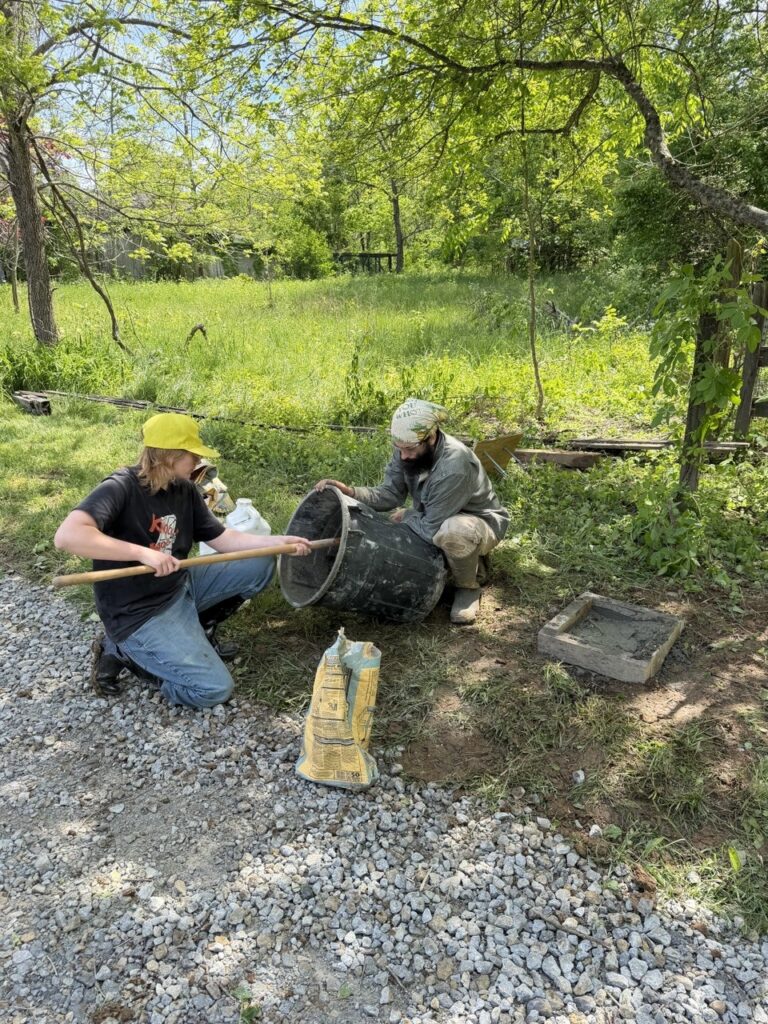
I’ve learned a lot, and am ever in the process of learning more. Outside of my own pursuits (crouching in my socks by a dogwood at Tremper Manor, chanting lichen names like some sort of fungal spell), I’ve gotten to drive a truck with a trailer (and spend thirty minutes trying to back it up), use a chop saw, mix concrete, and drive a tractor. I’m not a very handy person, and that’s half the fun of it. I firmly believe that, in order to be a good scientist, you have to love being wrong, and similarly, in order to acquire new skills, you have to love being bad at them. I’m working on it.
When I’m not hiking four miles through the hills with a chainsaw pack, trying to keep up with Brace, or shooing moths and grasshoppers out of the way of the Exmark, I face a different (and very twenty-first-century) challenge: there’s no Internet at the house. Instead, I’ve been writing, reading, and baking like a madman. A double recipe of flatbread every few days, vegan strawberry-lemon pie with coconut whipped cream, and shoo-fly cake for my twenty-first birthday. I’m re-reading Dracula. I recently finished The Tangled Tree, an excellent nonfiction epic about the development of science’s understanding of evolution, and my parent has been getting me into the Horus Heresy books, which are, bafflingly, pretty good.
And writing: at the end of March, I happened to finish two of my long-term projects, a book and a webcomic, at about the same time. Upon arriving at the Arc, I found myself flailing about for something to do. I can’t start drawing the next comic I’m planning until I have the script for the first part complete, and I haven’t worked on that hardly at all, because I’ve become possessed by the other new project I started: another prose book, this one an eco-horror sort of deal about decomposition and eating and lesbians. I wrote ten pages in one evening a few weeks ago. I’ve been working on it for two months and I’m at a hundred pages already. If I keep this up, I’ll have the whole first draft done in less than half a year. I think having no internet is good for me, even if it does mean that I have to drive twenty minutes to the library to do my classwork.
The house is nice, too. I saw a firefly from the porch a few nights ago, as well as a barred owl. The other weekend, after two days of nonstop rain, I wandered into the humid woods and saw a skunk (that’s a weird squirrel, I thought, upon seeing a bushy black tail waving amongst the leaf litter, and then I saw the stripes and thanked my lucky stars that I hadn’t gotten closer) and another barred owl, this one a fledgeling, perched on the ground at the base of a massive beech and glaring at me. It’s not exactly quiet out here, being right by the road: the roaring of trucks and the clattering of the Mennonite buggies is constant, but so is birdsong and bugsong, and there’s often a warm rain or a soft breeze.
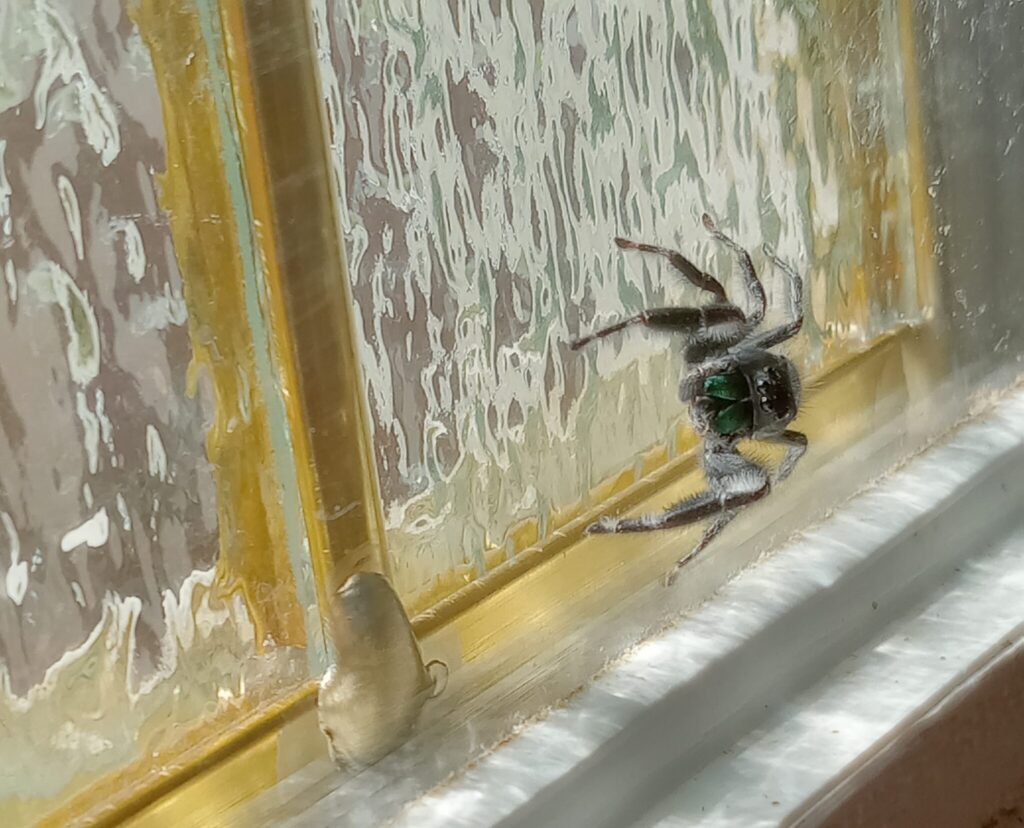
It’s the diversity of everything that keeps me in awe. I’ve seen species of bird from the dining room window that I had never seen in my life before. The population of spiders in the house alone is enviable. Earlier, during wildflower season, I could tramp twenty feet into the woods behind my house and see more spring ephemerals than I would over a two-mile stretch at a preserve in my hometown. It’s exactly why this sort of work is so important: the wildlands, the truly wild lands, where human hand has not yet skewed population dynamics toward those lucky few organisms most tolerant of our presence, where life thrives whether or not we’re there to see it, where things grow and die and decompose even if they don’t serve a purpose to us, are diminishing rapidly. In Ohio, I would hazard, they are almost gone. We cannot let the wilderness be concreted over.
As the Arc of Appalachia began: if you could, would you save it?
Our answer has to be yes.
Chainsaw Man: Brennan Mumper ’27 at Glen Helen Nature Preserve
Feb 13, 2025Last time I went on co-op, I travelled all the way out to Iowa and stayed there for nearly five months. It was lots of fun, but this time, I wanted to stay a little closer to home. I would spend my winter developing my existing skills rather than learning new ones.
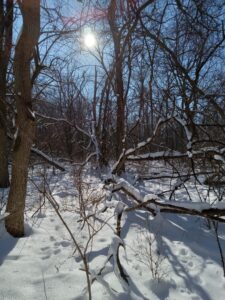
From one of my first days on the job.
So working at Glen Helen Nature Preserve was just about the perfect fit. I get to stay on-campus, in a room that I’m not sharing with feline hellspawn (although I do miss the little guys), and I’m close enough to visit family every once in a while if I want. Plus, before this co-op, I’d had a tradition of taking a two-hour walk in the Glen every weekend, so I already knew the place pretty well.
I’m a temporary part of the land management crew, which means I’m doing more or less the same stuff I was doing at my last job: trail maintenance and invasives removal, as well as any other miscellaneous tasks that need done. For instance, a few weeks ago, we spent our (freezing-cold) Monday wrapping chicken-wire cages around some of the beautiful old oaks around the pond to keep the beavers out. And to anyone who might worry: the little rascals still have plenty to chew on. We just don’t want them tearing down every tree in the area.
We’ve got a good team, although most of us are pretty new. The Glen is bigger than I thought– over a thousand acres– and, considering how many folks, both within the Yellow Springs community and without, like to visit, we’ve got plenty of work to do.
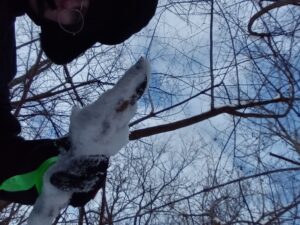
Me with a deer foot that I found frozen on the ground. (I put it back.)
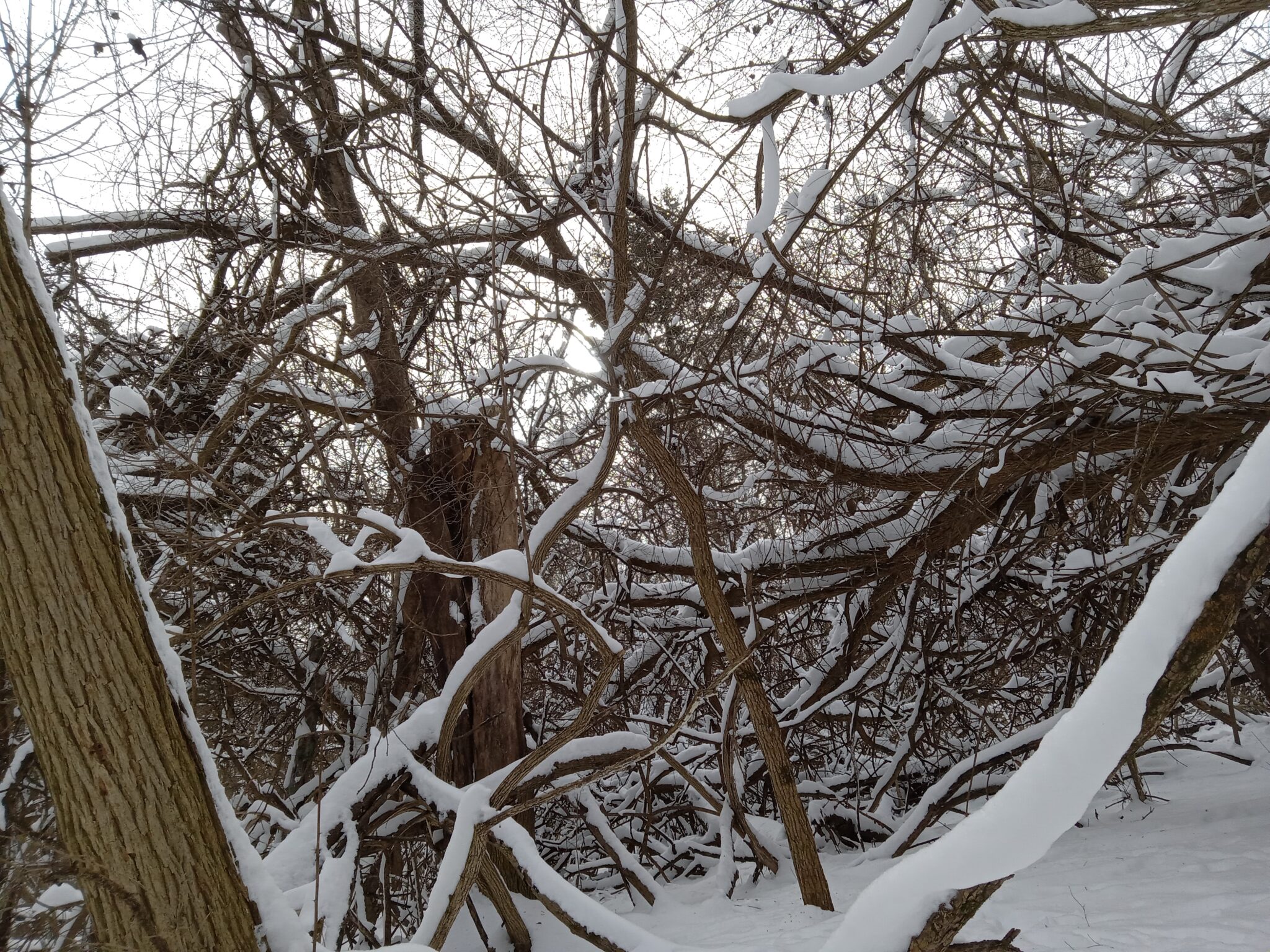
My first week was spent flagging native plants in Case Woods in snowy, sub-freezing weather. I bundled up: two socks per foot, two layers of shirts, and my vintage wolf pelt under the blocky black coat I found in my closet at home. All that and the hand warmers I shoved in my pockets weren’t enough to keep me totally warm, but I didn’t lose any fingers or toes, at least. Plus, it was gorgeous out there, what with the glittering blanket of snow over everything, and the air so cold I could see my breath. Birds were everywhere: lots of the seasonal juncos, as well as song sparrows, cardinals, hawks, and crows. I saw a couple deer, and a lot of deer poop, and only got lost enough to panic once.
As a kid, I attended enough nature programs to learn a little, but over the past few weeks, I’ve gotten much better at identifying invasive plants– honeysuckle is obvious, but I also know oriental bittersweet and privet now– and native plants and animals– some trees by the bark, a few new bird species, and I’m even working on the mushrooms now.
We’ve done a bit of sawing, too. They have a smaller electric chainsaw here, in addition to the larger gas ones, and to be honest it’s pretty nice. More maneuverable, and I don’t have to worry about spilling gas on myself. There’s a slope between Talus Trail and the road that is absolutely infested with invasives, so we spent some of the warmer days last week chopping, spraying, and trying not to slip on the melting snow and knock our heads into a chainsaw or a sharp honeysuckle branch.
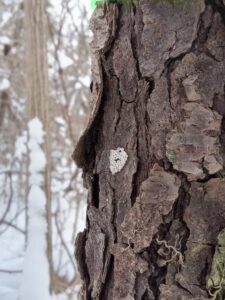
Mystery eggs I found. (Pretty sure they’re from a stinkbug.)
Over the last six months or so, my little brother has been collecting all of the manga in the excellent series Chainsaw Man by Tatsuki Fujimoto, which I’ve read about half of. I’m struck with questions about the series protagonist. Does he ever have to sharpen his chains? Could he chop down a tree by hugging it? Has he considered wearing chaps to protect his legs from getting sawed? (Probably not.) Is there an alternate reality in which Fujimoto’s popular manga instead features a horrible long-limbed creature that never works correctly, called Pole Saw Man?
This week was the warmest it’s been since I started, which also means all the trails are muddy as hell. The spot across the Beaver Pond near the Stepping Stones was so swampy we ended up spending Monday, Tuesday, and Wednesday putting in a whole new boardwalk.
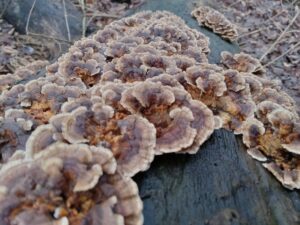
Some very nice turkeytail fungus.
Or, well, my coworkers, who actually know how to build a boardwalk, did. I spent pretty much the whole time carrying planks and tools up and down the stairs. Anyone who has been to the Glen knows what stairs I’m talking about: those steep, uneven stone steps that lead all the way down into the valley from the Corry Street parking lot. I probably went up and down those things a hundred times, each time with a ten-foot wooden board or two four-foot planks or a pickaxe or shovel or crowbar braced against my hip. It’s been a long time since I’ve been that worn out. By the time I got back to my dorm on Tuesday, my back and shoulders sounded like Pop Rocks. My legs are gonna be made of steel come spring.
All in all, it’s been fun! What with the classic Ohio winter weather, I’ve had plenty of free time to spend on comics, animations, and general art nonsense too. Plus, I keep finding myself a part of new TTRPG groups. I’ll have one every day of the week soon if I’m not careful.
Fires and Felines; Prairies, Prescribed Burns and Power Tools: Brennan Mumper ’27 at Whiterock Conservancy
May 15, 2024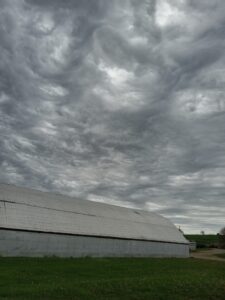
The sky on a stormy day over the Home Farm.
I’m not too big on travelling. For most of my life, the farthest I’d ever been from where I live in central Ohio was my birthplace in central Pennsylvania. So, while Iowa, a land famous for corn and corn alone, might not seem too exciting to the average person, but for me, it was… also not too exciting. Like I said, I don’t actually like to travel.
And, to be entirely fair, Iowa is pretty similar to Ohio anyway. The names, for a start. Both are constructed of four letters, three syllables, and very similar sounds. And corn. Corn is a big thing in both states. Many of the plants and animals are the same as well, although I have gotten to see some new faces– a thirteen-lined ground squirrel and a two-foot western fox snake who was very displeased when I picked him up– and of course goats and cows are the same the midwest over. The main differences I’ve noticed are the dust (it is so goddamn dusty here. I have to wipe off my water bottle every time I drink so I don’t just get a mouthful of powder. We have a filter on the sink so we don’t make like a glacier and become full of sediment) and the lack of trees. Not that there aren’t any trees: they’re just more sparse than in Ohio.
The job itself, however, has proven to be plenty interesting. I was definitely glad to have two housemates and fellow interns who have been here for a little while already so they could show me the ropes, or else I’d be pretty lost. The Conservancy is 5,500 acres of open, rolling green and gold hills, winding trails, ever-changing patches of charred earth, and copses of forest, full of deer, pheasants, red-wing blackbirds, goldfinches, rabbits, the occasional raccoon, Canada geese, an ever-dwindling herd of bison (for rather unfortunate reasons), so many cows, and goats that have on occasion escaped under the door of their barn and flooded into the curving road that leads up to the tenant house. My favorite days here are when the sky becomes heavy with dark silvery blue clouds and the ever-blowing wind hangs just a little more still than usual: the greyish sky intensifies the verdant earth beneath, and, if it rains, we don’t have as much work to do.
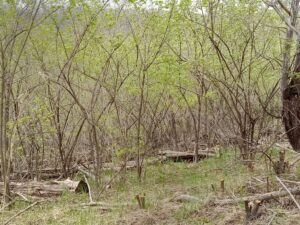
A truly heinous amount of honeysuckle.
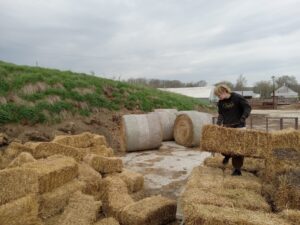
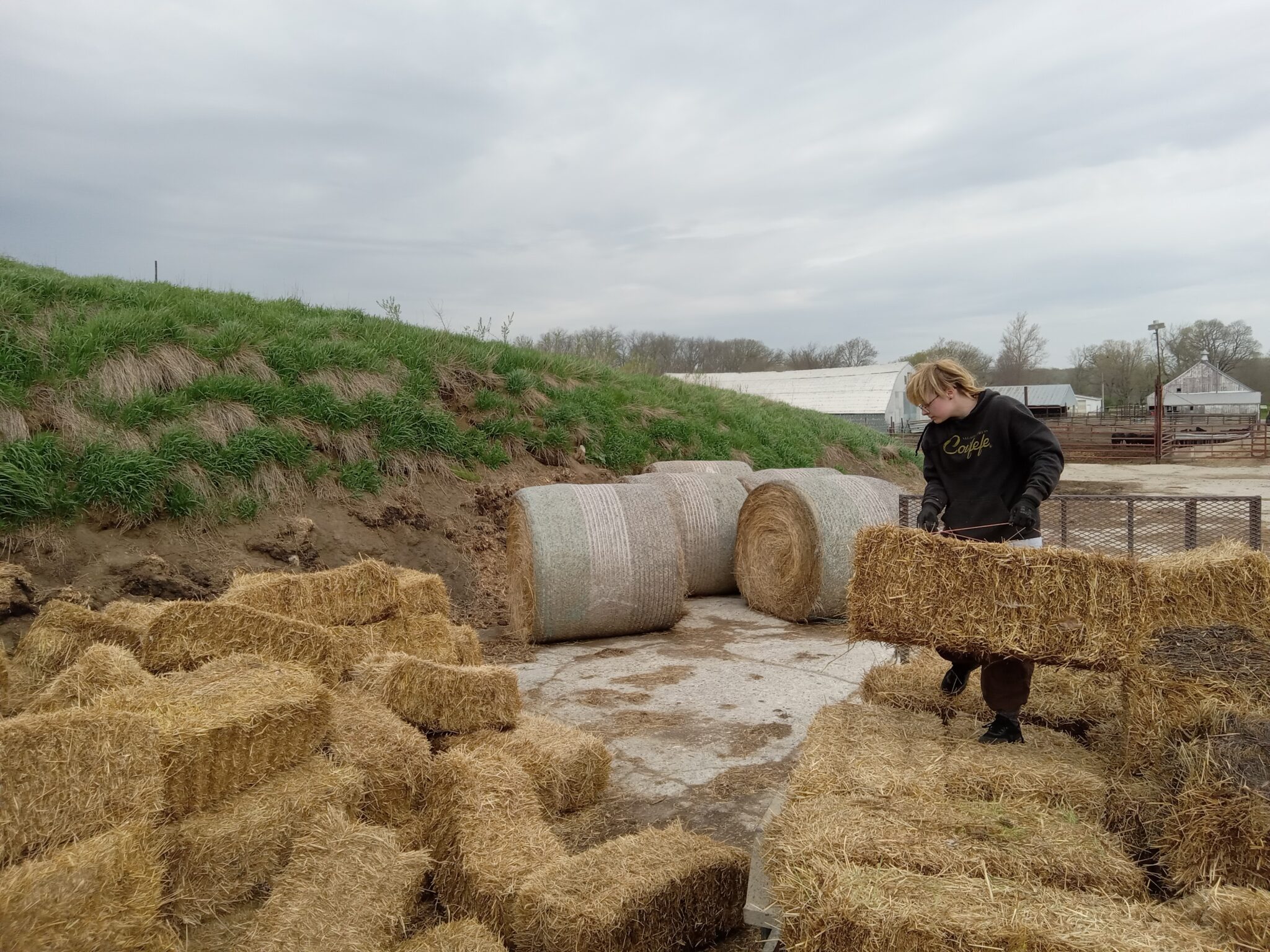
Tossin’ hay.
I’ve learned a lot, mostly in the social-skills and stepping-out-of-my-comfort-zone department, but a few practical skills too, both during and outside of work: how to operate a brush cutter, hand saw, and string trimmer; how to fill out a safety data sheet; what a prescribed burn looks like; how to keep two four-week old kittens alive and mostly healthy. I’ve helped with brush management (SO much honeysuckle), removing trees from trails, housekeeping, and community outreach events.
The thing I was most excited to potentially experience out here was with the prescribed burns. I wasn’t sure if I would even get to, given how I had no experience and it was pretty late in the season, but as it turns out, I was able to go out on a burn– on my second day here. And third day. And another one a couple of weeks later. We’re done with them now, though, so looks like that’s it for me, at least for now.
Burns are both more and less intense than I expected. I was informed, before heading out, that I should dress in 100% cotton because polyester could melt to my skin. I’m not a jeans person, so on all three burns I had to wear my pink denim pants, which now have soot stains on them; I’ll probably embroider some flames around the grey spots at some point.
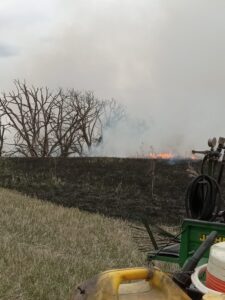
A picture from my second burn.
The burn itself is simple enough, at least for a guy who isn’t involved in the planning: get on a gator with a hose and water tub in the back, drive down to the burn site, and then once the two folks in charge of actually setting the fire with a drip torch are off, you just drive up and down the edge of the fire and spray out any flames flickering in the wrong direction.
It is hot, though. Before leaving, myself and the other two interns stocked all the vehicles with extra water, and it’s always needed. Once the fire gets established, you can feel yourself cooking. The worst part by far is the smoke. Even with goggles and a hood, the thick, acrid plumes sit heavily in the air and find their way into your eyes and nose. I’m sure that underneath all the layers, I looked like I’d been cutting the world’s biggest onion. The person I was paired with on my first burn accidentally blasted me with water when we were refilling our tank about halfway through, and to be honest, what with the heat and the smoke, I didn’t really mind.
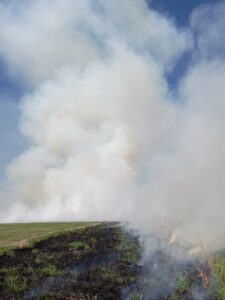
A picture I took, driptorch in my other hand, on my third burn.
The first two-thirds of a burn is intense, driving up and down and checking for any wayward fire: the last bit is mostly sitting around and watching the flames, now ringed with a thick line of scorched earth on all sides, as they makes their way into the center, where they will eventually flicker out, leaving behind the blackened remains of grass, toasted tree trunks, and exposed bones. Hawks wheel over the clouds of smoke, searching for any small animals scared out of the burning brush. On my third burn, I was placed on driptorch duty, and I felt an odd sense of pride looking out over that smoldering patch of earth: I helped do that. We drive past it almost every day on our way in to work, so I get to watch as new growth unfurls above the ash.
The other most interesting thing that I’ve experienced out here is parenthood. Specifically, one of the stray cats gave birth, and we ended up adopting two of the little ones. They live in my room because they’re still very small and one of my housemate’s dogs is very hungry for kitten flesh. They’re both a little bit evil: one of them likes feet, and the other one keeps peeing on my floor. But they also purr very loudly. This isn’t the first time I’ve taken care of baby animals, but it is the first time I’ve taken care of kittens, and while they aren’t quite as much work as baby birds, juggling kittens and a full-time job is no joke, especially when they wake me up at 5am with diarrhea. They are almost single-handedly the reason that I, a guy who usually gets work done as soon as it’s available, waited until the last minute to complete this very blogpost, and probably the reason why it’s so rambly and unstructured.
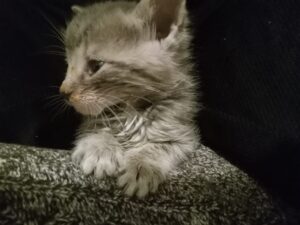
The Lieutenant, who hasn’t quite figured out litterboxes yet.
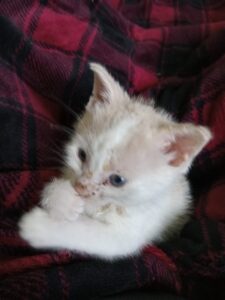
Mr. Squash, who LOVES toes.
Speaking of which, I need to go prepare their lunch.