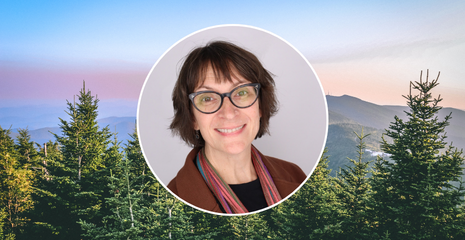


Max Miehlstein’s path to Antioch College winds through cultural psychology, disability studies, art, and queer studies. Their work centers on a fundamental question: how do people make personal meaning of their identity and sense of belonging within both smaller and broader cultural contexts?
That question has shaped everything from their research to their teaching philosophy. “My training in cultural psychology, alongside interdisciplinary work in disability studies, art, and queer studies, has led me to approach research as both an academic and participatory endeavor,” Miehlstein says. “One that seeks to amplify lived experience, creative expression, and community knowledge for meaningful representation in academia.”
From Reaction Times to Real Stories
Miehlstein’s research journey began in cognitive psychology, where they spent hours analyzing reaction times to eye gaze cues. “I quickly began to want deeper data about the complexities of identity, especially as I would have such wonderful conversations with people that I wished could be quoted and shared,” they recall.
That desire led them to qualitative methods, particularly photovoice, where participants take photos and those images become the data. Their dissertation explored queer and disability identity using a Community-Based Participatory Research (CBPR) approach, incorporating not just photos but art, poetry, and other creative expressions as data.
“The research method of photovoice, where participants take photos and those photos are analyzed as the data, showed me my work would primarily use qualitative methods,” Miehlstein says. “Using art as data for my dissertation was a collective and fun experience that confirmed this path.”
Teaching with a Student-Centered Lens
In the classroom and in advising, Miehlstein takes a student-centered approach. They provide context and foundational information first, then invite students to apply their own critical lens to see how theory, pathways, or career trajectories fit their lived experiences and goals.
“I hope students leave my classes and advising relationships with greater confidence in their own ability to ask meaningful questions, think critically, and recognize the knowledge they already bring,” Miehlstein says. “I want students to see psychology not simply as a subject they study, but as a tool for understanding themselves, their communities, and the world around them.”
This philosophy connects directly to Antioch’s mission of social justice and community engagement. Miehlstein encourages students to critically examine whose perspectives have traditionally shaped psychological knowledge, whose experiences may be missing, and how psychology can partner with communities to promote equity and social change.
“Meaningful learning happens not only in classrooms, but also through listening to, collaborating with, and learning from the communities we hope to serve,” they say.
Blurring the Lines Between Researcher and Participant
Miehlstein is excited about continuing to develop research at the intersections of identity, culture, disability, queerness, and creative expression at Antioch. They are particularly interested in participatory and community-based approaches that challenge traditional boundaries between researchers and participants.
“Establishing a line of work that intentionally blurs the traditional lines of what a participant is allows a full spectrum of individuals to be meaningfully involved in research projects at the level they would like to be involved at,” Miehlstein explains. “From the theory-driven overview, to results sharing, to contributing data, to analyzing it, to organizing community events, to just showing up. Conducting CBPR itself can be a mechanism for community building.”
Using photos, art, poetry, and film as data makes research more inclusive and engaging to witness as each project evolves. “My experience using CBPR and photovoice has reinforced my belief that knowledge does not only come from textbooks, researchers, or traditional academic institutions,” they say. “In my teaching, I try to create opportunities for students to see themselves as active contributors to knowledge.”
The Antioch Connection
For Miehlstein, Antioch’s student-centered culture stands out. They recall being struck during their first visit in June 2026 by the community meetings, where students felt comfortable speaking out, voicing opinions, and being heard by faculty.
“I especially love how actively student-centered Antioch is,” they say. “Each student is known by their academic advisor and co-op advisor.”
Miehlstein sees psychology and interdisciplinary studies as natural complements to Antioch’s dual work program. On both the academic and work sides, students are asked to connect ideas with lived experience and real-world contexts.
“I am especially interested in helping students reflect on those experiences through multiple lenses,” they say. “Sometimes social psychology may explain a phenomenon best, or maybe disability studies can offer a better perspective, and sometimes it is a philosophical inquiry to ponder for a lifetime. This way, experiential learning becomes not only professional preparation, but also an opportunity for critical reflection, community engagement, and personal growth.”
Beyond the Classroom
Outside of teaching, Miehlstein loves hiking and traveling, often to hiking destinations. Their go-to fun fact: they have been to more countries than U.S. states.
Part of why they love traveling is experiencing new cultures, including the subtle differences between cities and towns.
“People often conceptualize culture as something big and country-wide, maybe even tied essentially to language,” Miehlstein says. “But it also includes the subtle differences between cities and towns. Even the physical environment can impact daily routines, how someone uses public transportation, how and when to pay for a meal, what side of the sidewalk people prefer to walk on. The smaller customs in an area can really shape how you view the world.”
This relates directly to their philosophy of learning: everyone comes from slightly different backgrounds, everyone has a different lived experience, and everyone has a slightly different perspective to contribute to a shared space.
Learn More
Explore Max Miehlstein’s dissertation website, Artistic Identity Expressions, which shares their participatory research using creative methods:
https://sites.google.com/view/artistic-identity-expressions/home